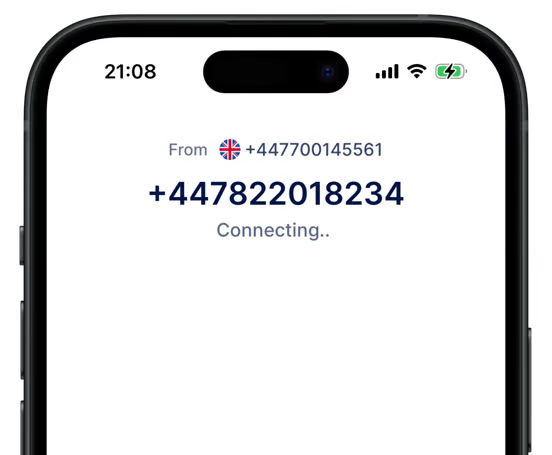
As online communication continues to evolve, the use of virtual phone numbers and fake numbers has become more common than ever. People rely on them to protect their privacy, register on websites, and manage personal or business communications without exposing their real phone numbers. This widespread usage naturally leads to an important concern: can fake numbers be traced? Understanding how these numbers work and the limits of traceability can help users stay informed and secure in the digital world.
What Are Virtual and Fake Phone Numbers?
Virtual phone numbers are legitimate phone numbers that operate over the internet rather than through a physical SIM card. They can receive calls and messages just like traditional numbers, but they are managed through online platforms. Fake phone numbers usually refer to either randomly generated numbers that are not connected to any telecom network or temporary numbers designed for short-term use. Both types are commonly used to maintain anonymity and reduce exposure to spam or unwanted contact.
Can Fake Numbers Be Traced?
Understanding the Basics of Tracing
Whether a fake number can be traced largely depends on how it was created and how it is used. The term “fake number” covers several different technologies, each with different levels of traceability.
Randomly Generated Fake Numbers
Randomly generated numbers are not connected to any service or network. Because they do not exist in telecom systems, they cannot be traced to a person or a device. These numbers leave no digital trail and are essentially untraceable.
Virtual Phone Numbers
Virtual phone numbers are real numbers provided by online services. While they function like standard phone numbers, tracing them usually leads only to the service provider. Accessing information about the actual user typically requires legal authorization, and even then, the available data may be limited depending on the provider’s policies.
VoIP and Disposable Numbers
VoIP and disposable numbers are among the hardest to trace. These numbers often require minimal registration details and are designed for temporary or privacy-focused use. As a result, tracing them back to a specific individual is extremely difficult without official legal intervention.
How Fake or Virtual Numbers Are Identified
Number Validation Methods
Telecom systems and security tools can analyze a phone number to determine whether it belongs to a mobile network, a landline, or a virtual service. This process helps identify whether a number is likely virtual or disposable rather than traditional.
Carrier and Line-Type Analysis
By examining the carrier and line type associated with a number, it is often possible to detect whether the number is linked to a VoIP or virtual provider. This information is commonly used by businesses to prevent fraud or misuse.
Pattern Recognition and Databases
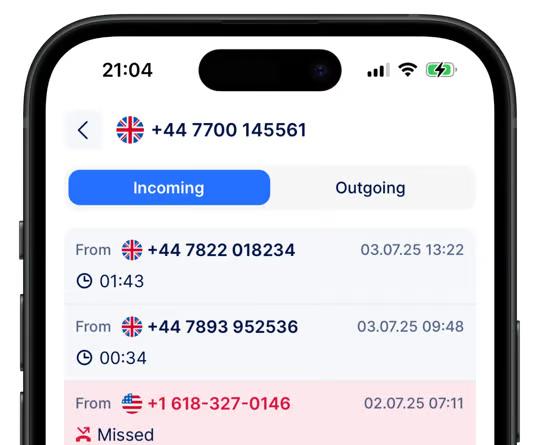
Some fake or temporary numbers follow recognizable patterns or appear in databases of known disposable numbers. Matching a number against these records can help flag it as non-permanent or virtual.
Why Fake Numbers Are Difficult to Trace
Minimal Identity Requirements
Many virtual phone number services do not require extensive identity verification. This limits the amount of personal data that can be linked to a number, making tracing more difficult.
Privacy-Oriented Design
Virtual phone numbers are intentionally built to protect user privacy. This design makes them appealing for legitimate use but also reduces traceability.
Legal and Privacy Restrictions
Even when service providers store user information, privacy regulations often prevent them from sharing data without proper legal approval. This further limits who can trace a number and under what circumstances.
Conclusion
In most cases, fake numbers cannot be easily traced. Randomly generated fake numbers are untraceable, while virtual and VoIP numbers usually lead only to the service provider rather than the individual user. This level of anonymity is one of the main reasons virtual phone numbers are widely used today.